
The geopolitical landscape of the Middle East is currently marked by a significant escalation of tensions, pointing towards a potential large-scale conflict. Reports indicate a rapid increase in military posturing and declarations from key regional players, drawing the attention of global powers and observers alike.
This period of heightened alert involves several nations, with particular focus on the interactions between Iran, Israel, and the United States. The implications of these developments extend beyond immediate military concerns, prompting reflection on their broader significance in a historical and, for some, a prophetic context.
Mounting Tensions in the Middle East
Iran’s Strategic Posturing
Iran has recently engaged in a series of assertive military maneuvers and declarations. These actions signal a heightened state of readiness and a willingness to engage in conflict if deemed necessary.
- Live-fire exercises have been announced and are underway in the strategically vital Strait of Hormuz, a critical chokepoint for global oil shipments.
- Joint military exercises have been conducted with China and Russia in regional waters, demonstrating a strengthening of strategic alliances.
- The Revolutionary Guard has publicly declared full readiness for war, underscoring Iran’s commitment to its defense posture.
International Responses and Concerns
The international community, particularly the United States and Israel, has responded to Iran’s actions with increased vigilance and strategic deployments. The U.S. has notably amplified its military presence in the region.
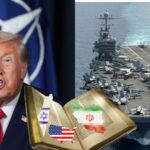
- The United States has deployed additional destroyers and an aircraft carrier to the Middle East, significantly increasing its naval capabilities.
- Israel reportedly anticipates potential U.S. strikes on Iranian nuclear and ballistic missile facilities, a scenario that would likely lead to retaliatory attacks against Israel.
- Russia has expressed specific concern regarding the safety of Iran’s Bushehr nuclear plant amidst these escalating developments, highlighting the potential for widespread consequences.
Negotiations between the U.S. and Iran are reported to have failed, leading the Pentagon to formulate potential attack plans, which further underscores the gravity of the situation.

Viewing Current Events Through a Prophetic Lens
Signs of the ‘Last Days’
For many who engage with biblical prophecy, the current escalation of events in the Middle East is seen as a significant indicator of the ‘last days’ and the ‘birth pains’ that precede major prophetic fulfillments. While acknowledging the possibility of temporary delays, the confluence of geopolitical factors appears to align with long-held interpretations.
The perceived readiness of global systems for a one-world government and the implementation of mechanisms like the ‘Mark of the Beast’ are also cited as further indicators, suggesting that conditions are aligning for the imminent return of Jesus and the Rapture of the Church before the commencement of the seven-year Tribulation period.
Connecting to Prophecy
The specific nature of the escalating conflict is often linked to particular biblical prophecies. The involvement of regional powers and the unfolding dynamics bear resemblance to passages in the Old Testament.
- The regional alignment and potential conflict scenarios are frequently connected to prophecies found in Psalm 83 and Ezekiel 38, which describe conflicts involving specific nations in the Middle East.
- The mention of a potential Chernobyl-level nuclear risk at the Bushehr plant, should conflict erupt, is a sobering thought. Some interpreters connect such a catastrophic event, or similar widespread destruction, to passages like those found in Jeremiah 49, which speaks of judgment upon specific nations in the region.
These interpretations emphasize a belief that the world is witnessing a rapid progression towards significant prophetic events, urging a calm yet vigilant observation of global developments.
Scripture of the Day
And ye shall hear of wars and rumours of wars: see that ye be not troubled: for all these things must come to pass, but the end is not yet. For nation shall rise against nation, and kingdom against kingdom: and there shall be famines, and pestilences, and earthquakes, in divers places. All these are the beginning of sorrows.
— Matthew 24:6-8 (KJV)
The words of Jesus in Matthew 24 provide a profound framework for understanding the turmoil we observe in the world today. The escalating tensions in the Middle East, with nations rising against nation and the widespread preparation for war, resonate deeply with the “wars and rumours of wars” prophesied thousands of years ago.
This verse reminds us that such geopolitical strife, while deeply concerning, is not unexpected within a prophetic worldview. It serves as a sober reminder that these events, described as the “beginning of sorrows” or “birth pains,” are indicators of a larger unfolding plan, urging us to remain watchful and discerning.
In the face of potential conflict and global uncertainty, the instruction “see that ye be not troubled” offers a crucial perspective. It is a call to maintain peace in times of great unrest, grounded in the understanding that these developments, however intense, are part of a divine timetable.
Therefore, as we witness the current global dynamics, this scripture encourages a calm, analytical approach, recognizing the signs of the times while fostering a steadfast reliance on foundational truths, rather than succumbing to fear or alarm.



Leave a Reply