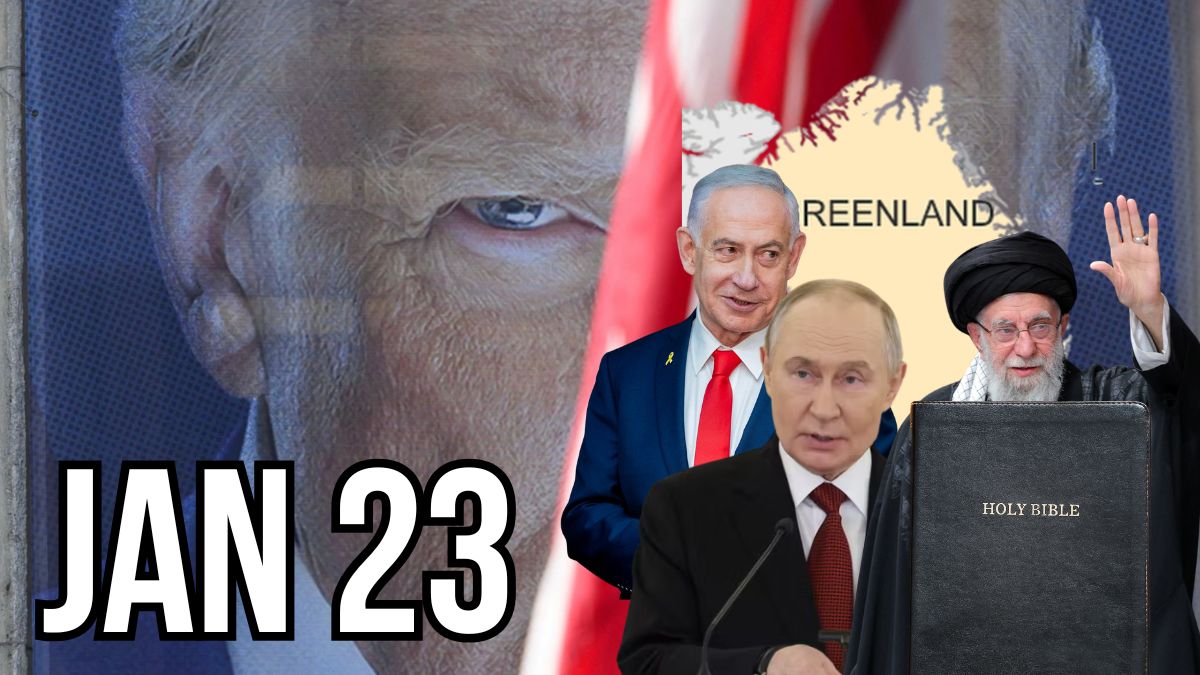
As of January 23rd, 2026, the Middle East remains in a highly precarious state. A fragile ceasefire between Israel and Hamas continues to hold following what has been termed the ‘Twelve-Day War’ in mid-2025. In an effort to stabilize the region, US President Donald Trump has convened a new ‘Board of Peace’ in Davos. The stated goal of this board is to enforce a ‘Comprehensive Plan’ for the region. Details emerging about this plan include the establishment of a technocratic government for Gaza, alongside the deployment of a US-led International Stabilization Force.
Concurrently, Iran is grappling with its most severe internal crisis in decades. Following massive anti-regime protests that erupted in late 2025 due to economic collapse, the government has responded with lethal force, with reports indicating thousands have been killed. Amidst this bloody crackdown, there are widespread reports of a financial exodus. Iranian elites, including potential successors to the Supreme Leader, have reportedly been transferring billions of dollars in cryptocurrency to Dubai, anticipating potential regime collapse or further US intervention. The US has issued stark warnings of ‘grave consequences’ if Tehran persists in its violent crackdown. Meanwhile, Israel continues its targeted actions, specifically striking Hezbollah smuggling routes along the Syrian-Lebanese border, while Russia is reportedly mediating between Israel and Iran in an attempt to prevent the total fall of its key ally.
Shifting our focus to the broader geopolitical landscape, the World Economic Forum in Davos this year has been a stage for significant realignments. President Trump’s ‘Board of Peace’ notably excludes both China and the United Nations, a move that analysts suggest signals a substantial departure from traditional post-World War II international institutions. Further tensions have emerged in the Arctic, opening a new front of geopolitical friction. NATO Secretary General Mark Rutte has issued warnings to both Russia and China regarding their encroachment on Greenland’s economic and military infrastructure. This follows renewed US interest in acquiring Greenland, which has also caused some friction within the NATO alliance, even as the conflict in Ukraine continues to unfold. Separately, there have been reports of escalating global conflict fears, with some media outlets and social platforms raising ‘World War 3’ rhetoric following US actions such as the reported seizure of a Russian-linked oil tanker and the alleged arrest of Venezuelan President Nicolás Maduro.
Speaking of Ukraine, high-level negotiations took place in Davos and Russia on January 21st and 22nd, involving US envoys and Russian and Ukrainian officials. Reports from these talks suggest the discussions have narrowed down to potential ‘land deals’, indicating a possible partition of Ukraine in an effort to freeze the ongoing conflict. Russia, despite acknowledging high casualties, continues to maintain an aggressive posture. NATO Secretary General Rutte has warned that a ceasefire on Russia’s terms could establish a dangerous strategic precedent, potentially leaving Europe’s eastern flank unstable.
Now, let’s turn to the rapid acceleration of the global shift toward cashless systems and digital identification, an area seeing unprecedented activity this past week. Reports from January 19th to 22nd, 2026, indicate a major push for Central Bank Digital Currencies, or CBDCs. India, for instance, has proposed linking the CBDCs of all BRICS nations at the upcoming 2026 summit, with the explicit goal of bypassing Western financial systems. China’s digital yuan, the e-CNY, has already seen its transaction volumes surge past $2.3 trillion. Its ‘mBridge’ platform is actively facilitating cross-border settlements, particularly with Russia, asserting itself as a significant counterweight to US dollar dominance.
The European Central Bank has advanced the Digital Euro into its next critical phase, with an aim for full issuance by 2029. In a related development, Kazakhstan is serving as a global pilot program for this transition, with 90% of its transactions now digital, and its blockchain-based CBDC fully integrated into government welfare programs. This rapid adoption is compelling other nations to fast-track their own digital currency initiatives. Even Russia has officially cleared its digital ruble for government payments this month, and Israel is nearing a decision on the launch of its own Digital Shekel.
Here in the United States, the Senate is engaged in fierce debate over the ‘CLARITY Act,’ a bill championed by Senator Cynthia Lummis. This legislation aims to establish a comprehensive regulatory framework for digital assets. This push for regulation comes as the cryptocurrency market experiences a significant downturn, with Bitcoin sinking below $90,000 amidst massive institutional outflows and renewed US-EU trade tensions. A scheduled Senate Banking Committee markup on the bill was abruptly canceled following intense clashes between traditional banking lobbyists and an emerging pro-crypto faction.
Further cementing this digital shift, new mandates in Mexico now require biometric verification for mobile connectivity, a system that has already processed millions of users, setting a precedent for digital ID enforcement. Discussions at the World Economic Forum in Davos this year have heavily focused on what is termed the ‘inevitable’ convergence of Artificial Intelligence, Digital IDs, and CBDCs. This has led some critics and alternative media to characterize these developments as the unleashing of a ‘massive control grid’ capable of restricting individual access to services and finance. Indeed, the World Economic Forum itself has highlighted 2026 as a pivotal year for the transition to digital financial infrastructure, with a growing focus on programmable money and its integration with digital identification systems.
These are the facts as reported across various global channels this past week. A world in flux, rapidly reorganizing, with new technologies taking center stage.
And so, when we consider these events unfolding before our very eyes – a ‘Board of Peace’ in the Middle East, the frantic push for digital currency, the shifting geopolitical landscape in Eastern Europe and Iran – we must turn our attention to the ancient prophecies of Scripture. Because as I always say, the world is not falling apart; it is falling into place.
Let’s start with this ‘Board of Peace’ and the ‘Comprehensive Plan’ for the Middle East, spearheaded by a singular global figure like President Trump, attempting to enforce a ‘multi-stage treaty’ in an incredibly volatile region. This immediately brings to mind the words of the Prophet Daniel, specifically Daniel chapter 9, verse 27. It says, “And he shall confirm the covenant with many for one week: and in the midst of the week he shall cause the sacrifice and the oblation to cease, and for the overspreading of abominations he shall make it desolate, even until the consummation, and that determined shall be poured upon the desolate.”
Now, students of prophecy have long understood this “covenant with many” to refer to a treaty, likely involving Israel, that a powerful world leader will confirm. While we are not date-setting, and certainly not naming names, the pattern is unmistakable: a strong leader, a comprehensive plan, a treaty for a fragile Middle East. The very language used – a ‘Board of Peace’ to enforce stability – echoes another significant passage. The Apostle Paul, writing in 1 Thessalonians chapter 5, verse 3, warns us: “For when they shall say, Peace and safety; then sudden destruction cometh upon them, as travail upon a woman with child; and they shall not escape.” This ‘peace and safety’ rhetoric often precedes profound global upheaval. We see the *fragility* of this proposed peace, with unrest in Iran, Israel targeting Hezbollah, and the US warning of ‘grave consequences’ if Tehran continues its crackdown. This is not true peace, but a managed, engineered stability, pregnant with future conflict.
Consider also the fracturing of the global order, the sidelining of the United Nations, and the emergence of a new ‘Board of Peace’ that excludes major powers like China. This signals a reorganization, a shift in global governance that many biblical scholars connect to the prophecies in Revelation concerning a coalescing of power leading to a singular authority. The expansion of tensions into the Arctic, the ‘wars and rumors of wars’ in Venezuela – these are all symptoms of a world reeling, a world in “birth pangs” as Jesus described in Matthew chapter 24, verses 6 and 7: “And ye shall hear of wars and rumours of wars: see that ye be not troubled: for all these things must come to pass, but the end is not yet. For nation shall rise against nation, and kingdom against kingdom: and there shall be famines, and pestilences, and earthquakes, in divers places.” We are indeed hearing of wars and rumors of wars from every corner of the globe.
Now, let us turn our attention to the economic developments, which are perhaps the most chilling in their prophetic implications. The rapid push for Central Bank Digital Currencies, the BRICS nations seeking a linked CBDC network to bypass Western systems, China’s digital yuan surpassing trillions in transactions, the Digital Euro advancing, and nations like Kazakhstan going 90% cashless with CBDCs integrated into government welfare programs. Then we hear of the ‘CLARITY Act’ in the US, seeking a comprehensive regulatory framework for digital assets amidst market chaos, and the talk at Davos of an ‘inevitable convergence’ of Artificial Intelligence, Digital IDs, and CBDCs to create a ‘massive control grid’.
This, my friends, is the technological infrastructure for what Revelation chapter 13, verses 16 and 17, describes with profound clarity: “And he causeth all, both small and great, rich and poor, free and bond, to receive a mark in their right hand, or in their foreheads: And that no man might buy or sell, save he that had the mark, or the name of the beast, or the number of his name.”
Think about that. If money becomes purely digital, programmable, and linked to a mandatory digital ID, the ability to “buy or sell” will be entirely dependent on compliance with this system. When Kazakhstan integrates its CBDC with government welfare, it shows us the mechanism: no digital ID, no access to funds, no ability to function within society. The chaos in the crypto market, the calls for “regulatory clarity,” the very word “CLARITY Act” – all of this is used to justify the consolidation of power and control. It is setting the stage for a global financial beast system, one where anonymity and financial freedom are eradicated, and where access to commerce is granted or denied based on adherence to a central authority. The rapid ascent of the digital yuan challenges the existing global order, paving the way for a unified digital currency system to “restore” trade and stability after a potential global financial crisis. This is a system perfectly designed to implement the control described in Revelation.
Finally, let us consider the geopolitical realignments, specifically regarding Russia and Iran. The ‘land for peace’ talks in Davos, potentially allowing Russia to consolidate territory in Ukraine and ‘freeze’ its western front, is highly significant. If Russia secures its western flank, it frees up the “King of the North,” often interpreted as Russia in Ezekiel chapters 38 and 39, to turn its strategic focus southward. Ezekiel 38, verse 4, speaks of God putting “hooks into thy jaws, and I will bring thee forth, and all thine army… against the mountains of Israel.”
And then there is the situation in Iran – biblical Persia – teetering on the brink of collapse amidst internal protests and a bloody crackdown. The potential destabilization or radical restructuring of the Iranian regime could dramatically shift the geopolitical board. Iran is a key ally of Gog in the Ezekiel 38 alliance. A change in its regime could be a prerequisite, or a catalyst, for the formation of that multi-nation coalition prophesied to descend upon Israel. The use of cryptocurrency by fleeing Iranian elites, tracked by the US, also underscores the double-edged sword of digital finance – a tool that can be used to escape, but also a tool for total oversight, again bringing us back to the concerns of a coming global control grid.
What we’re watching right now—across the Middle East, global finance, and the wider geopolitical arena—doesn’t feel like a set of disconnected headlines anymore. It feels like systems moving into place at the same time. You’ve got “peace” initiatives being floated at the highest levels, you’ve got accelerating momentum toward digital money and digital identification, and you’ve got wars and rumors of wars multiplying across regions that were already unstable. When you step back, it’s the convergence that matters: diplomacy, economics, technology, and conflict all tightening into a single global trajectory.
And I want to say this clearly: I’m not here to scare you. I’m here to put the news into the framework Jesus told us to use. Because it’s completely understandable that the headlines can create unease. A “Board of Peace” being positioned as a stabilizing mechanism in the Middle East. The push for cashless systems and digital identity becoming mainstream policy discussion. The fracturing of old alliances and the formation of new blocs. The sense that conflict is simmering everywhere at once. If you’re feeling pressure when you watch it, you’re not irrational—you’re paying attention.
But for those who are watching through scripture, this isn’t shock—it’s confirmation. The Bible doesn’t just predict isolated events; it warns of a world moving toward certain conditions: centralized authority, managed stability, economic leverage used as a tool of control, and a final period where global structures harden quickly. That’s why these developments matter. Not because every headline is a direct fulfillment, but because the world is building the kind of framework prophecy describes.
Take the technological side for a moment. When biometrics, digital IDs, and central bank digital currencies are discussed as the future of “security” and “efficiency,” it immediately raises a serious question: what happens when participation in society is routed through a single system? Revelation 13 describes a time when the ability to buy or sell is restricted—commerce becomes conditional. Whether you interpret the details literally or symbolically, the principle is unmistakable: access can be granted or denied. And the modern infrastructure for that kind of control is no longer theoretical.
Now look at the Middle East angle. When leaders talk about enforcing peace through a new framework—especially one that sounds comprehensive, staged, and enforced rather than simply negotiated—it naturally echoes the prophetic theme of a covenant confirmed and a stability that doesn’t last. That’s why prophecy students pay attention to language like “peace,” “security,” and “stability.” Scripture warns us that there is a kind of peace the world celebrates that is not the peace of God—a managed calm that can break suddenly.
So this isn’t a call to despair. It’s a call to discernment. Jesus told us to watch—not to panic. He told us that when these things begin to come to pass, we should lift up our heads, because redemption draws near. The signs were never meant to paralyze believers with fear. They were meant to prepare us, steady us, and remind us that God is not reacting to history—He’s sovereign over it.
And if the connections we’ve discussed today are stirring something in you—if you feel that internal nudge—don’t mislabel it as fear. In many cases it’s simply awareness: the realization that the world is moving fast, and that spiritual readiness matters more than comfort. That’s why we watch. That’s why we test everything against scripture. And that’s why we refuse to be lulled by surface-level messaging when deeper systems are being built underneath.
So what does readiness look like? First, it’s personal: making sure you belong to Christ—fully, sincerely, without assumption. If you’re unsure, settle that. Turn to Jesus, not as an idea, but as Savior and Lord. And for those who already know Him, readiness means staying grounded: prayer, endurance, obedience, time in the Word, and a willingness to speak hope to people who are overwhelmed. We are called to be watchmen—clear-eyed, steady, and anchored.
Yes, the pace of change is accelerating. And yes, the stakes feel higher than they used to. But this is not a reason to panic. It’s a reason to understand the times, keep your perspective, and live with intention. Keep watch. Stay rooted. And remember: prophecy isn’t given to fuel fear—it’s given to call God’s people to preparation.

Leave a Reply